

Weather-Resistant Cladding Explained: Which Material Works Best for Your Project?
Published on January 22, 2026
Posted in Advice & Reviews
by MKM
4 min read
Weather-Resistant Cladding Explained: Which Material Works Best for Your Project?
Choosing the right weather-resistant cladding is one of the most important decisions you'll make when protecting your building from the UK's unpredictable climate. Whether you're working on a residential home, commercial property, or garden structure, the cladding you select needs to withstand rain, wind, UV exposure, and temperature fluctuations while maintaining its appearance and structural integrity. This guide will walk you through the key materials, considerations, and options available to help you make an informed decision that suits your project requirements and budget.
Key Considerations When Choosing Weather-Resistant Cladding
1. Material Durability and Lifespan
The material you choose directly affects how long your cladding will last and how much upkeep it will need. Pressure-treated timber can last 10-20 years with the right treatment, detailing, and maintenance. Composite cladding typically offers 25-30 years of performance with minimal upkeep. Fibre cement is one of the most durable options, lasting 30-50 years, and resists rot, fire, and insect damage. Think beyond the upfront cost, and consider the total cost of ownership, including repainting, retreating, or replacing boards over time.
2. Climate Exposure and Location
Your building's location determines the level of weather protection required. Coastal properties face salt spray and strong winds, so you'll want materials like marine-grade aluminium, fibre cement, or composite that won't corrode. High rainfall areas need cladding with excellent water resistance and ventilation. Urban builds might lean toward low-maintenance, stain-resistant materials like uPVC, while rural settings may benefit from natural timber that blends with the landscape.
3. Maintenance Requirements
Different cladding materials need different levels of care. Composite and uPVC require just occasional cleaning with soapy water, making them ideal for hard-to-reach areas. Timber cladding needs treatment every 1-2 years, or 3-5 years unless you're using high-performance timber like Western Red Cedar or Thermowood, which are naturally more durable. Metal cladding should be checked periodically for scratches or corrosion, especially in coastal environments.
4. Installation Method and Building Type
The method you choose influences costs and suitability. Timber boards are ideal for timber-frame homes and are easy to install horizontally. Metal cladding suits modern commercial or industrial buildings and is often installed vertically. Rainscreen cladding systems provide superior moisture control through a ventilated cavity and are ideal for high-performance buildings. Ensure your structure can support the weight, fibre cement is heavier than composite or timber.
5. Aesthetic and Design Flexibility
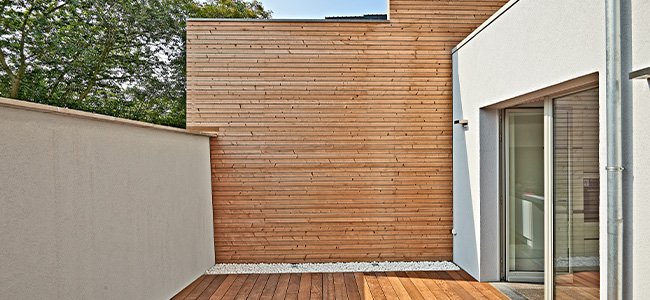
Function matters, but so does form. Timber gives a warm, natural look with varied grains and colour options. Composite cladding mimics timber, but without the upkeep. Fibre cement offers sleek, contemporary lines and can be painted in almost any colour. Metal cladding delivers a clean, industrial look with standing seam, corrugated, or flat panel styles.
Comparing Weather-Resistant Cladding Materials
|
Material |
Weather Resistance |
Expected Lifespan |
Maintenance |
Best For |
|
Pressure-Treated Timber |
Good (with correct treatment) |
10-20 years |
Medium (re-treat every 1-2 years) |
Residential homes, sheds, garden buildings |
|
Composite Cladding |
Excellent |
25-30 years |
Very Low (wash only) |
Low-maintenance homes, coastal areas |
|
Fibre Cement |
Excellent |
30-50 years |
Low (repaint every 10-15 years) |
Commercial buildings, high-exposure sites |
|
uPVC Cladding |
Excellent (varies by quality) |
20-25 years |
Very Low (wash only) |
Budget-conscious builds, quick installations |
|
Metal (Aluminium/Steel) |
Excellent |
30-40+ years |
Low (check coating and damage) |
Modern architecture, coastal or industrial buildings |
Note: Lifespans assume correct installation and care. Some materials like composite and fibre cement are inherently more stable; timber depends on ongoing treatment. For metal cladding, marine-grade coatings are recommended in coastal areas.
Top Weather-Resistant Cladding Options
Pressure-Treated Softwood Cladding
Affordable and easy to source, this timber is treated with preservatives to protect against rot and insect damage. It's available in shiplap, featheredge, and tongue-and-groove profiles.
Why it matters: A solid option for sheds and garden buildings, but requires regular upkeep and a well-ventilated backing structure to perform long-term.
Thermowood and Modified Timber Cladding
Thermowood is heat-treated to resist moisture, while modified timber like Accoya goes through a chemical process (acetylation) to achieve Class 1 durability.
Why it matters: More stable and longer-lasting than standard timber. Reduced movement, less warping or swelling, and longer life, even in exposed areas.
Made from recycled wood fibres and polymers, composite cladding gives the appearance of timber with none of the hassle.
Why it matters: Longest maintenance-free lifespan of any timber-look material. Won't rot, split, or fade, ideal for modern homes, schools, or low-access areas.
A blend of cement, cellulose, and sand, these boards are non-combustible, rot-proof, and highly durable. Why it matters: Excellent choice for commercial buildings, coastal locations, or fire-regulated areas. Paintable and available pre-finished for faster installs.
Budget Levels for Weather-Resistant Cladding
|
Budget Tier |
Material Options |
Typical Coverage |
Who It's For |
|
Economy |
Pressure-treated softwood, basic uPVC |
Sheds, outbuildings, basic residential |
DIY homeowners, garden projects, budget-conscious renovations |
|
Mid-Range |
Composite cladding, standard fibre cement, treated hardwoods |
Family homes, extensions, small commercial |
Homeowners seeking low maintenance, trade projects with moderate budgets |
|
Premium |
Western Red Cedar, modified timber, high-grade fibre cement, metal |
Architectural projects, high-exposure sites, luxury homes |
Clients prioritizing aesthetics and longevity, commercial developments |
Note: Coverage costs are material-only estimates and exclude installation, fixings, and breathable membrane systems. Premium materials often deliver better long-term value through reduced maintenance and extended lifespan.
Practical Tips for a Long-Lasting Cladding Job
Install a breathable membrane and rainscreen cavity behind your cladding. This allows moisture to escape while protecting the building structure, preventing condensation buildup that can cause damage even with weather-resistant materials.
Use stainless steel fixings in coastal areas to prevent rust. Corrosion-resistant fixings are essential for exposed locations where salt spray accelerates deterioration of standard galvanized fixings.
Seal cut ends of timber and fibre cement during install to prevent moisture ingress. Cutting treated timber exposes untreated wood that's vulnerable to water penetration. Apply end-grain preservative to all cuts.
Allow for expansion gaps, especially with composite and timber products. All materials expand and contract with temperature changes. Leave appropriate gaps between boards to prevent buckling during seasonal changes.
Consider vertical installation for better water shedding in exposed areas. Vertical cladding sheds water more effectively than horizontal installation, reducing water penetration risk, particularly important for exposed gable ends.
Use appropriate profiles, as shiplap and tongue-and-groove offer better weather protection. Overlapping designs create additional barriers against wind-driven rain compared to simple square-edge boards.
Maintain at least 150mm ground clearance to avoid splashback and moisture wicking. This simple detail significantly extends cladding lifespan by preventing ground moisture and pest access, regardless of material choice.
A Note on Fire Performance
If you're cladding a home extension or commercial build, consider fire safety ratings:
Making Your Final Decision
Choosing weather-resistant cladding is all about balancing performance, budget, appearance, and effort. If you're working in coastal or high-exposure areas, go for fibre cement or composite. If you want natural charm, Cedar or Thermowood delivers, just be ready for a bit of upkeep.
And remember, cheap up front can cost more later. A premium product with minimal maintenance may save you time and money over 20-30 years compared to a cheaper board that needs replacing sooner. Consider the total lifecycle cost rather than just initial material price.
Visit your local MKM branch to see material samples, discuss your specific project requirements, and get expert advice on which weather-resistant cladding best suits your needs. Our team can guide you through technical specifications, recommend appropriate fixings and membranes, and ensure you have everything needed for a professional, long-lasting installation.
Explore Weather-Resistant Cladding at MKM
Ready to protect your project from whatever the weather throws at it? Explore MKM's full range of cladding options online or pop into your local branch to see samples, get expert advice, and find everything you need for a tidy, long-lasting job, built around you.